
Grease Interceptor & Grease Trap Services • Miami-Dade & Broward
The Right Grease-Control System for Your Business
Grease interceptor and grease trap installation, replacement and compliance work for restaurants and commercial food-service facilities. We help coordinate the sizing, plans, permits and construction your project needs.
Restaurants · Commercial Kitchens · Food-Service Facilities
Your project, from start to finish
Plan. Build. Close Out.
Site and plumbing review
Interceptor sizing and engineering plans
Permit coordination
Installation and replacement
Inspections and project closeout
Interceptor sizing and engineering plans
Permit coordination
Installation and replacement
Inspections and project closeout
Equipment selection and installation depend on your facility, plumbing arrangement and permitting requirements.
New Installation, Replacement or Compliance Work
Grease-Control Issues Can Disrupt Your Business
A cracked interceptor, an undersized unit or a correction notice can require more than a quick plumbing fix. We review your existing system and project requirements to help define the appropriate repair, replacement or new installation.
When to Request an Assessment
- A cracked, leaking or deteriorated interceptor
- An undersized or improperly installed unit
- Plumbing connections that need correction
- A DERM violation or permit correction notice
- A new restaurant or food-service facility
- Questions about reusing an existing interceptor
Grease-Control Planning & Construction
A Solution Sized for Your Facility
The appropriate grease-control device depends on your operation, plumbing fixtures, anticipated discharge and available space. We coordinate the technical planning and construction scope around those requirements.
New Grease-Control Installations
Indoor grease traps and outdoor or underground interceptors, when suitable and approved for the facility. Installation includes the piping and site work defined in the approved scope.
Interceptor Replacement
Assessment and replacement of cracked, leaking, deteriorated or undersized units. Existing equipment may be reused only when its condition, capacity and installation are acceptable.
DERM & Permit Corrections
Review of violation notices, inspection reports and permitting comments. Work may include sizing calculations, plans, equipment replacement, plumbing corrections and inspection coordination.
Monitoring Devices & Alarms
Approved grease-monitoring equipment or alarms can be included when required. Device selection and settings must match the interceptor and applicable agency requirements.
A Clear Process From Review to Closeout
01
Review Your Facility
Share your address, business type, existing equipment details, photos and any correction or violation notices. A site visit may be recommended.
02
Plan & Coordinate
We review sizing, plumbing arrangements and site conditions, then coordinate the plans, permitting documents and required approvals.
03
Build & Close Out
Complete the approved installation or corrections, coordinate inspections and restore affected surfaces within the agreed scope.
Plan for business continuity. A temporary interruption of kitchen or sanitary service may be necessary during piping connections. Whenever practical, we plan the work to reduce disruption to your operations.
Grease Interceptor & Grease Trap FAQs
Questions Before Starting?
Explore common questions about equipment selection, sizing, installation, permitting and business operations.
Yes. We install and replace grease interceptors and grease traps for restaurants, cafés, bakeries, commercial kitchens, supermarkets, food-production facilities, and other businesses that generate fats, oils, or grease.
The terms are often used interchangeably, but they may describe different types and capacities of grease-control equipment.
A grease trap is commonly a smaller unit installed indoors near plumbing fixtures. A grease interceptor is typically a larger-capacity unit installed outdoors or underground. Hydromechanical grease interceptors may also be installed indoors or outdoors, depending on their approval and application.
The appropriate device depends on the facility, plumbing arrangement, anticipated grease discharge, available space, and requirements of the permitting authority.
Most restaurants and commercial food-service facilities that discharge—or have the potential to discharge—fats, oils, and grease into the sanitary system will require an approved grease-control device.
This can include:
- Restaurants
- Cafés and coffee shops
- Bakeries
- Delis and sandwich shops
- Bars with food preparation
- Commercial kitchens
- Hotels
- Schools and daycare facilities
- Grocery stores
- Food-processing businesses
- Catering facilities
A project-specific review is needed to determine the applicable requirements.
Miami-Dade businesses that handle, prepare, or process food and have the potential to discharge fats, oils, or grease may be required to obtain a Fats, Oils and Grease Discharge Control Operating Permit, commonly called a FOG or GDO permit.
We can assist with the grease-control-device plans, calculations, permitting documents, installation, and required corrections.
Yes. We can review the Notice of Violation, inspection report, or permitting comments and develop a plan to bring the facility into compliance. Depending on the violation, the work may include:
- Inspecting the existing grease-control device
- Preparing engineering or plumbing plans
- Performing grease-interceptor sizing calculations
- Replacing a damaged or undersized interceptor
- Correcting the plumbing connections
- Installing required monitoring equipment
- Assisting with permit and inspection coordination
Yes. A cracked, leaking, deteriorated, or improperly installed interceptor may require repair or complete replacement. We can evaluate the existing installation, determine the appropriate replacement unit, prepare the required plans, and complete the permitted installation.
Grease-interceptor sizing may be based on factors such as:
- Type of food-service operation
- Number and type of plumbing fixtures
- Fixture capacity
- Flow rate
- Daily food production
- Seating or occupancy
- Hours of operation
- Applicable plumbing and environmental requirements
- Manufacturer specifications
The smallest or least expensive unit is not always acceptable. Proper sizing is important for permit approval and long-term performance.
Yes, when an indoor grease-control device is allowed and suitable for the facility. The installation must provide adequate capacity, accessibility for maintenance, proper venting, and compliant plumbing connections.
Some facilities may be required to install a larger outdoor or underground interceptor instead.
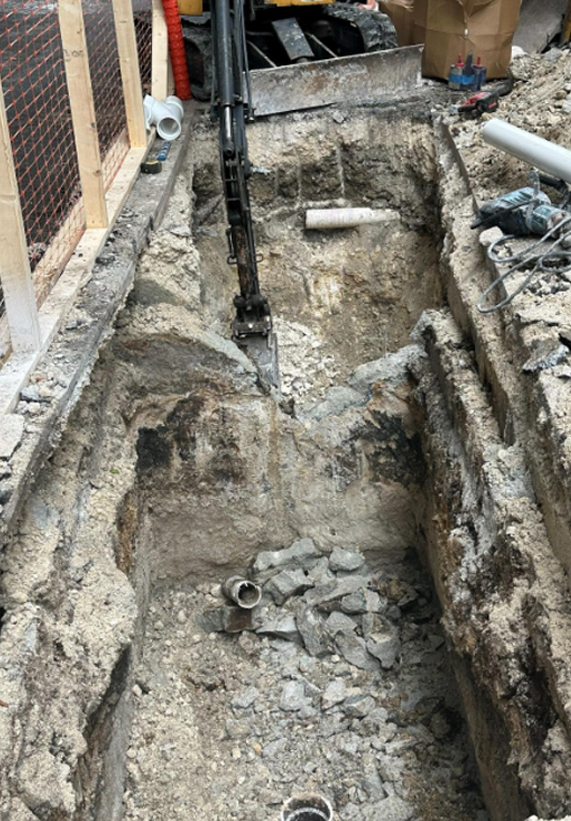
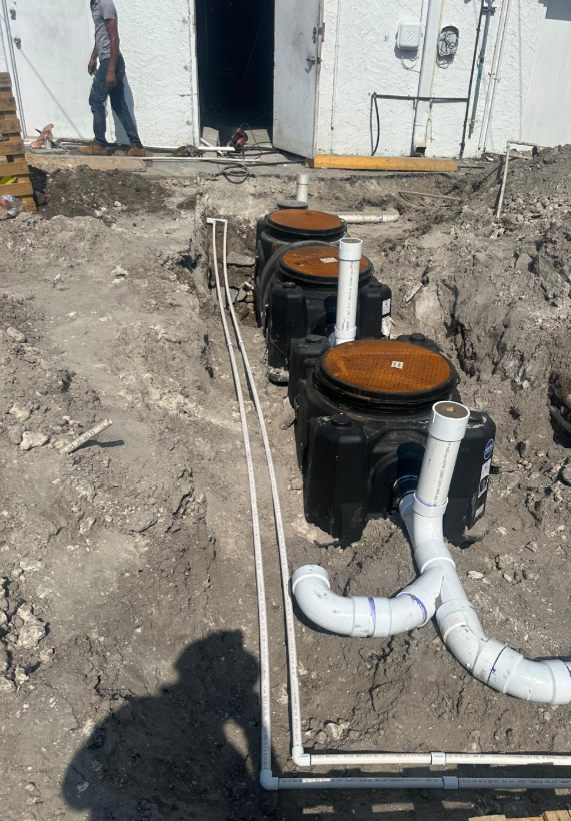
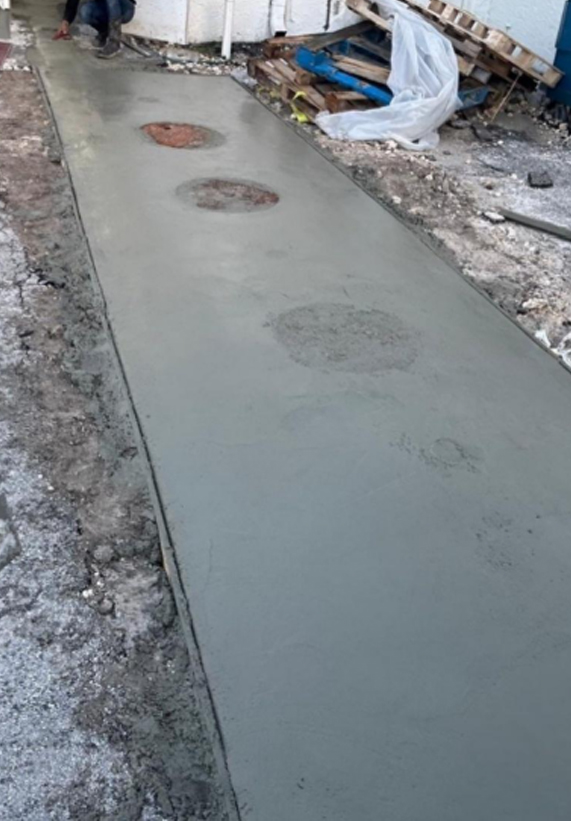
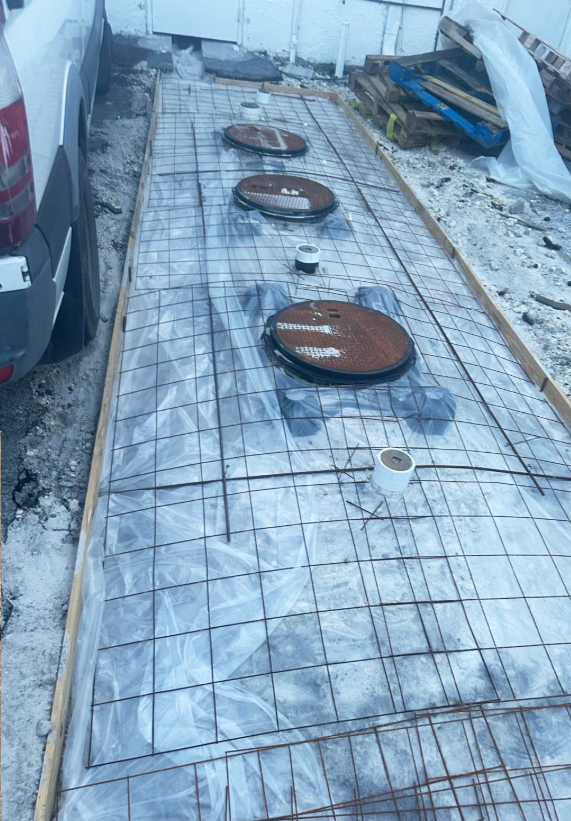
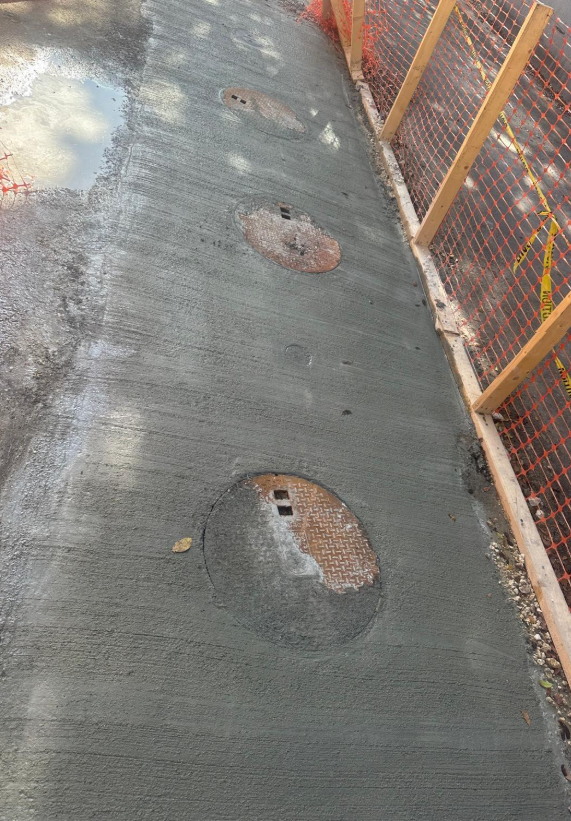
Yes. We install underground grease interceptors, including the associated excavation, piping connections, access covers, backfill, inspections, and surface restoration included in the approved scope of work.
Site access, groundwater, existing utilities, traffic areas, and structural loading must be evaluated before installation.
Possibly. The existing interceptor must be appropriately sized, structurally sound, accessible, properly connected, and acceptable to the permitting authority.
An inspection and review of the existing system are recommended before assuming it can remain.
Yes. When required, we can include an approved grease-monitoring device or alarm as part of the grease-interceptor installation or compliance work. The specific equipment and alarm settings must be compatible with the interceptor and applicable agency requirements.
Construction time depends on the interceptor type, location, excavation requirements, plumbing modifications, inspections, and restoration work. The permitting and plan-review process may take longer than the physical installation.
We provide a project schedule after evaluating the site and identifying the required approvals.
It depends on the location of the interceptor and the extent of the plumbing work. Temporary interruption of kitchen or sanitary service is often necessary while the grease-waste piping is disconnected and reconnected.
Whenever practical, we can plan the work to reduce disruption to business operations.
Start With Your Facility
Tell Us What Your Grease-Control Project Needs
Send your property address, business type and a brief description of the proposed work or existing problem. Our team will review your request and help determine the next step. A site visit may be needed before a final construction proposal.
Have existing plumbing plans, equipment photos, an interceptor model number or a DERM notice? Mention them in your message so our team can request the relevant information.
Serving Miami-Dade and Broward County.
Request a Project Estimate
By submitting, you agree to be contacted about your service request.
87 Construction & Engineering
Construction • Engineering • Grease-Control Services